
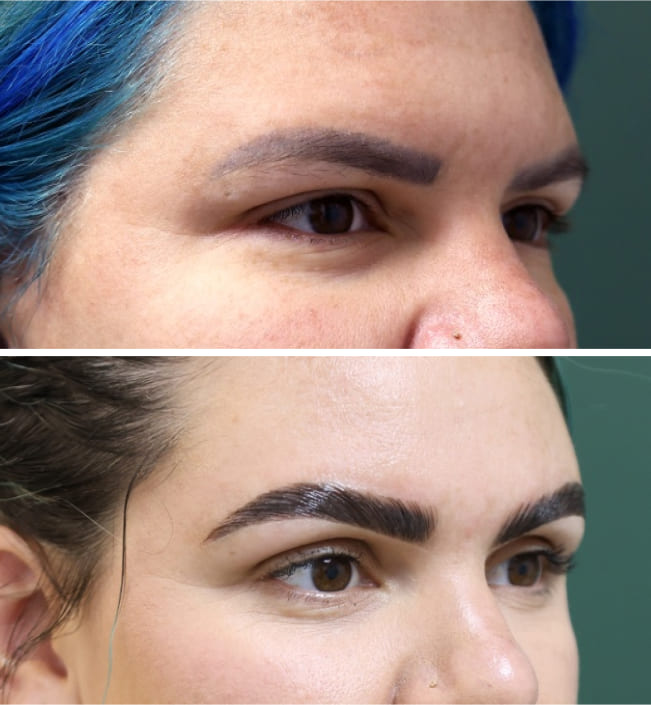
Quick answer: After an eyebrow transplant, the skin usually starts looking and feeling better within one to two weeks. You may notice some redness, swelling, small scabs, or itching at first. The transplanted hairs may fall out during the first few weeks, but this is a normal part of healing. New eyebrow hairs often begin growing around three months and continue becoming fuller over the next 9 to 12 months. Everyone heals differently, so be sure to follow the care instructions we give you.
Eyebrow transplant recovery time includes two separate stages: the healing you can see on the skin and the slower growth of the transplanted hair. Most redness, swelling, and crusting improve within the first one to two weeks, but new eyebrow growth takes several months.
Your recovery may be slightly different depending on your skin, the number of grafts placed, and the technique used. Use this guide to understand the usual timeline, but always follow the instructions given by your own hair restoration provider.
Key Takeaways
- Most visible redness, swelling, and crusting improve within 7 to 14 days.
- Mild tenderness, itching, tightness, and small scabs are common during early healing.
- Transplanted eyebrow hairs usually shed within the first few weeks.
- New hairs may begin emerging around three months and often become more noticeable between months three and five.
- Brow density, texture, and shape can continue improving for 9 to 12 months or longer.
Eyebrow Transplant Recovery at a Glance
It helps to think of recovery as two processes happening at the same time. Your skin may look healed before the transplanted follicles begin producing new hairs.
| Time after treatment | What you may notice | Care and activity |
| First 24 hours | Mild redness, swelling, tightness, or tenderness. The brows may look darker than usual. | Do not touch or rub the grafts. Avoid direct water pressure, steam, sweat, makeup, and skincare products. |
| Days 2 to 3 | Swelling may move toward the upper eyelids. Tiny scabs, mild bruising, itching, or numbness may appear. | Light walking and desk work may be comfortable. Avoid exercise, heavy sweating, scratching, and long periods of bending forward. |
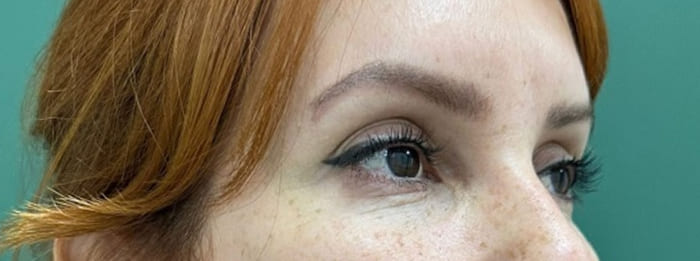
| Days 4 to 7 | Crusts become more visible while redness and swelling begin to improve. The brows may look dark, rough, or uneven. | Begin gentle cleansing only when approved. Avoid strenuous exercise, swimming, saunas, steam rooms, and picking at the crusts. |
| Week 2 | Most swelling and tenderness improve. Crusts begin falling away naturally, but mild redness or itching may remain. | Normal washing, showering, light exercise, work, and social activities may be resumed with approval. Makeup is often delayed for 10 to 14 days. |
| Weeks 2 to 4 | Transplanted hairs may shed, causing the brows to look thinner or sparse. This is usually normal. | Regular exercise, makeup, skincare, and swimming may be resumed once approved. Do not pluck the transplanted hairs. |
| Months 1 to 3 | The skin usually looks healed, but there may be little or no visible new growth. Some patients may begin noticing fine hairs near the end of this period. | Most normal activities can continue. Wait for approval before waxing, threading, chemical peels, or laser treatments near the brows. |
| Months 3 to 6 | New hairs may begin emerging around month three and often become more noticeable between months three and five. Early growth may be fine, light, patchy, or uneven, and one brow may grow faster than the other. | Gentle brushing, light trimming, makeup, and shaping may begin after your provider approves them. |
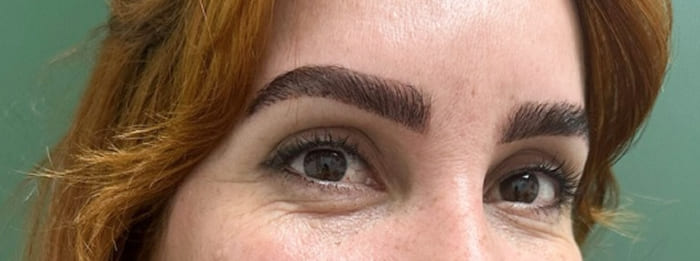
| Months 6 to 9 | The brows gradually look fuller. Hairs become thicker, but some may grow longer or have a different texture. | Use a clean spoolie and small brow scissors to manage longer hairs. Avoid plucking the transplanted hairs. |
| Months 9 to 12 and beyond | Shape, coverage, density, and hair direction become easier to judge. Some areas may continue improving after one year. | Continue regular trimming and grooming. Discuss lasting gaps, uneven growth, or direction concerns during your follow-up visit. |
Ready for Fuller, Natural-Looking Brows?
Take the next step with a personalized eyebrow transplant consultation.
Eyebrow Transplant Recovery Timeline
When to Contact Your Doctor
Most symptoms should become milder as your recovery continues. Contact your provider if you notice:
- Worsening pain
- Redness that spreads
- Swelling that continues to increase
- Pus or unusual drainage
- Fever
- Heavy or ongoing bleeding
- Symptoms that return after the area had improved
Factors That Can Affect Eyebrow Transplant Recovery Time
Recovery and growth can be influenced by:
- The number of grafts transplanted
- Skin sensitivity and your normal healing response
- Overall health and circulation
- Smoking or nicotine use
- Active skin irritation or infection
- Autoimmune or inflammatory hair-loss conditions
- Scarring in the eyebrow area
- Previous eyebrow procedures
- Donor-hair thickness, texture, and curl
- The technique used to harvest and place the grafts
- The angle and direction of graft placement
- How closely you follow the aftercare instructions
Underlying skin conditions and significant scar tissue may affect graft growth and should be evaluated before treatment.
Why Choose Graft Hair Restoration and Aesthetics for an Eyebrow Transplant?
An eyebrow transplant requires more than simply placing hair into an empty area. Each graft must be planned around your facial features and placed at a careful angle so the hairs follow a natural eyebrow pattern.
Graft Hair Restoration and Aesthetics combines hair restoration experience, personalized brow design, and continued recovery support for patients considering this procedure.
- More than 18 years of hair restoration experience: Founder Elsa Rivero, APRN, has worked in hair restoration since 2007.
- Relevant professional training: Elsa earned nursing degrees, including a Master of Science in Nursing in Family Practice, and is a member of the American Association of Nurse Practitioners.
- Eyebrow-specific planning: Brow shape, fullness, graft angle, and hair direction are planned around each patient’s existing brows and facial features.
- Ongoing follow-up: The team provides care beyond the procedure, including recovery guidance and monitoring as the transplanted hairs grow.
Located in Kendall, Graft Hair Restoration and Aesthetics serves patients from across Miami-Dade, including Pinecrest, South Miami, Coral Gables, Palmetto Bay, Cutler Bay, Doral, Homestead, and surrounding communities.

Frequently Asked Questions About Eyebrow Transplant Recovery
How long does eyebrow transplant recovery take?
Most visible swelling, redness, and crusting improve within one to two weeks. New growth takes longer and usually develops over 9 to 12 months or more.
How long do redness and scabbing last?
Small crusts commonly remain for about 7 to 14 days. Mild pinkness can last longer, especially in sensitive skin.
Is eyelid swelling normal after an eyebrow transplant?
Mild swelling around the upper eyelids can occur during the first few days. Contact your provider if the swelling is severe, painful, affects your vision, or continues getting worse.
When can I wash my eyebrows after the procedure?
Follow the washing schedule provided by your hair restoration team. Some protocols keep the grafts dry for several days, while others allow controlled cleansing earlier.
When can I return to work?
Some patients return after a few days. Others wait one or two weeks because of visible redness and crusting.
When can I exercise after an eyebrow transplant?
Light activity may be allowed after early swelling improves. Strenuous exercise and heavy sweating should wait until your provider confirms the grafts are secure.
When can I wear eyebrow makeup again?
Many patients are asked to wait about 10 to 14 days, but the skin must be healed and free of open areas or crusting. Confirm the timing with your provider.
When are eyebrow transplant grafts secure?
The grafts become more stable as the skin heals during the first one to two weeks. There is no universal day when every patient’s grafts are fully secure.
Is it normal for transplanted eyebrow hairs to shed?
Yes. Temporary shedding during the first few weeks is a common part of recovery and does not automatically mean the follicles have been lost.
When does new eyebrow growth begin?
New hairs may begin emerging around three months and often become more noticeable between months three and five. Early growth may be fine, sparse, patchy, or uneven because each follicle grows on its own schedule
When can I trim transplanted eyebrow hairs?
Begin trimming only after new growth is established and your provider has approved grooming. Use small scissors rather than plucking the hairs.
Will transplanted eyebrow hairs continue growing long?
They often do because most donor follicles come from the scalp. Regular trimming may be needed to maintain the preferred eyebrow length.
When will I see the final eyebrow transplant results?
Most patients can better evaluate their results around 9 to 12 months. Some areas may continue developing beyond the first year.
What symptoms should I report to my doctor?
Report severe pain, worsening swelling, spreading redness, fever, pus, unusual drainage, persistent bleeding, or symptoms that return after initially improving.
Schedule an Eyebrow Transplant Consultation in Kendall, FL
Understanding the recovery timeline can help you prepare, but your treatment plan should be based on your brows, donor hair, skin, and goals.
Schedule a personalized eyebrow transplant consultation with Graft Hair Restoration and Aesthetics in Kendall, Florida. Our team will evaluate your eyebrow pattern, explain what recovery may look like for you, and create a plan focused on natural shape, direction, and long-term growth.