
Quick answer: Start by addressing the most common triggers, including rapid weight loss, low protein intake, and possible nutrient deficiencies. Do not lower or stop your GLP-1 medication on your own. Instead, speak with your prescribing clinician, make sure you are eating enough protein and nutrients, use gentle hair care, and consider a hair-loss evaluation if the shedding continues or worsens.
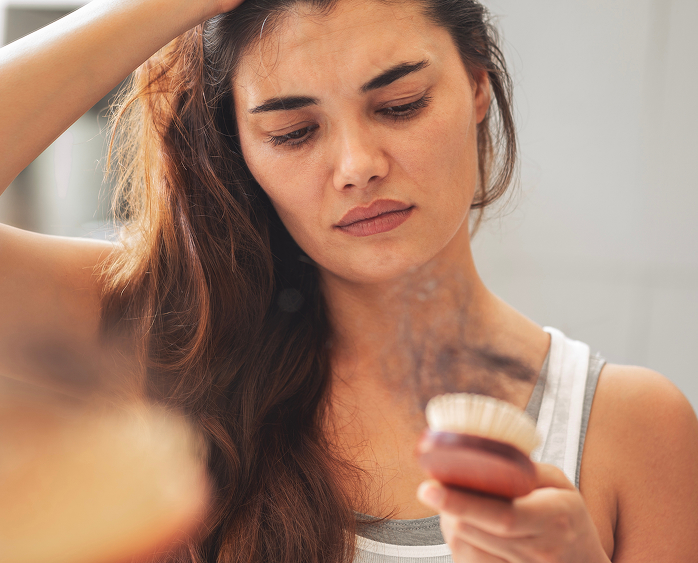
Hair loss after GLP-1 dose increase can be alarming, especially when the medication has otherwise been working well for you. In many cases, the shedding is connected to changes that happen around the dose increase, such as stronger appetite suppression, eating less protein, faster weight loss, or the physical stress that significant weight loss can place on the body.
The good news is that this type of shedding is often temporary. The first step is figuring out what is actually causing it. That may mean looking at your weight-loss rate, nutrition, medication history, scalp, and whether another form of hair loss is happening at the same time.
Key Takeaways
- Hair loss after a GLP-1 dose increase may be connected to rapid or continued weight loss, not necessarily the dose change by itself.
- Eating much less can make it harder to get enough protein, iron, zinc, vitamin D, and other nutrients important for normal hair growth.
- Telogen effluvium is a common type of temporary shedding that can appear weeks or months after physical stress or significant weight loss.
- Treatment may include correcting nutritional problems, improving hair care, treating an underlying form of hair loss, or considering hair growth treatments when appropriate.
- Do not stop, lower, or change your GLP-1 medication without speaking with the clinician who prescribed it.
Note: Not every case of hair loss during GLP-1 treatment is caused by weight loss or the medication. Patchy hair loss, scalp irritation, continued thinning, or worsening symptoms should be properly evaluated.
Why Can Hair Loss Happen After a GLP-1 Dose Increase?
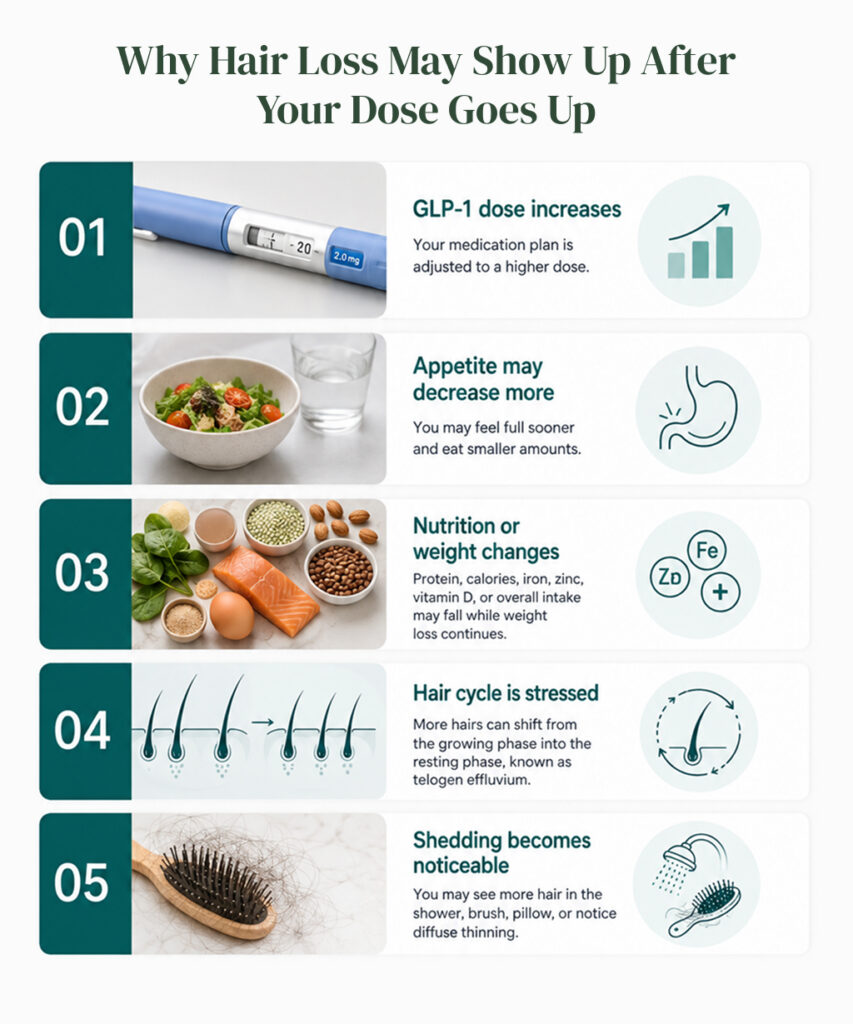
Increasing a GLP-1 dose can make appetite suppression stronger. For some people, that means meals become much smaller, protein intake falls, and weight loss speeds up.
That combination can place stress on the body. Hair is not essential for survival, so when the body is dealing with major changes or does not have enough nutrients available, more hairs can move out of their normal growing stage and into a resting stage.
Possible factors include:
- stronger appetite suppression
- eating too few calories
- inadequate protein
- low iron, zinc, vitamin D, or other nutrients
- rapid or continued weight loss
- physical stress from significant weight changes
- telogen effluvium
Current prescribing information for Wegovy and Zepbound reports hair-loss reactions associated with weight reduction. This does not mean that every dose increase directly causes hair loss, but it confirms that shedding can occur during treatment and weight loss.
Another reason the connection can be confusing is timing. You may increase your dose today but not notice shedding until one to several months later. According to the American Academy of Dermatology, telogen effluvium can occur after significant physical stress or weight loss and may become noticeable months after the triggering event. Telogen effluvium often has this delay because affected hairs spend time in the resting stage before they fall out.
The timing can be delayed. Hair shedding may become noticeable weeks or months after the change that triggered it, which is why the connection with a dose increase is not always obvious.
What Does GLP-1-Related Hair Loss Look Like?
Hair shedding related to rapid weight loss often looks different from a single bald spot. You may notice more hair in the shower, on your brush, on your pillow, or when running your hands through your hair.
The thinning is usually spread across the scalp. Your ponytail may feel smaller, your part may look wider, or your scalp may become easier to see.
Telogen Effluvium vs. Other Types of Hair Loss
Telogen effluvium is a temporary form of diffuse shedding caused by a stressor to the body. Sudden weight loss, low protein intake, iron deficiency, thyroid problems, illness, and certain medications are recognized triggers.
Other types of hair loss can look different:
- Pattern hair loss: Usually develops gradually and may affect the hairline, temples, crown, or part.
- Alopecia areata: Often causes clearly defined round or patchy areas of hair loss.
- Inflammatory or scarring hair loss: May cause redness, tenderness, scaling, burning, or permanent follicle damage.
- Hair breakage: The hair shaft breaks, rather than the entire hair shedding from the root.
This is why getting the diagnosis right matters before starting treatment.

Experiencing Hair Loss After Your GLP-1 Dose Increase?
Hair shedding is usually temporary. Get a personalized treatment plan tailored to your goals.
How to Treat Hair Loss After a GLP-1 Dose Increase
Treatment starts with identifying what changed around the time your shedding began.
1. Review Your GLP-1 Dose With Your Prescribing Clinician
Do not stop or reduce your GLP-1 on your own.
Talk with the clinician managing your medication. They can review how quickly you are losing weight, how much you are able to eat, whether you are having significant nausea or appetite suppression, and whether the current dosing plan still makes sense for you.
The goal is not simply to stop weight loss. It is to make sure your treatment is medically appropriate and that your body is getting what it needs.
2. Prioritize Protein and Adequate Nutrition
Hair is made largely from a protein called keratin. If your appetite drops significantly and you consistently eat too little protein, hair growth can be affected.
Try to include a protein source with meals, even when portions are small. Depending on your diet, this could include eggs, fish, poultry, Greek yogurt, cottage cheese, beans, lentils, tofu, or other protein-rich foods.
Severe calorie restriction and low protein intake are recognized triggers for telogen effluvium.
Your individual protein needs can vary, especially if you have kidney disease or another medical condition, so personalized nutrition advice may be appropriate.
3. Check for Nutritional Deficiencies
Taking a handful of hair supplements is not always the answer.
If shedding is significant, your clinician may recommend blood work based on your medical history and symptoms. This may include checking:
- iron and ferritin
- vitamin D
- zinc
- vitamin B12 or folate when appropriate
- thyroid function when indicated
Correcting a real deficiency can support normal hair growth. Taking extra vitamins when you are not deficient may not provide the same benefit and, in some cases, taking too much of certain nutrients can create other problems.
4. Reduce Hair and Scalp Stress
Your hair may be more vulnerable while you are shedding, so this is a good time to treat it gently.
Limit frequent high-heat styling, aggressive brushing, bleaching, chemical relaxing, and tight hairstyles that pull on the hair. These habits may not be the original cause of telogen effluvium, but they can increase breakage and make thinning look worse.

Concerned that your shedding is more than a temporary change?
A professional hair-loss evaluation can help determine whether you are dealing with telogen effluvium, pattern hair loss, or more than one condition at the same time.
Can Hair Loss Treatments Help Regrowth?
Sometimes the best treatment is correcting the trigger and allowing the normal hair cycle to recover. Other patients may benefit from additional treatment.
Options can include:
- topical minoxidil
- prescription hair-loss medications when appropriate
- platelet-rich plasma, or PRP, hair restoration
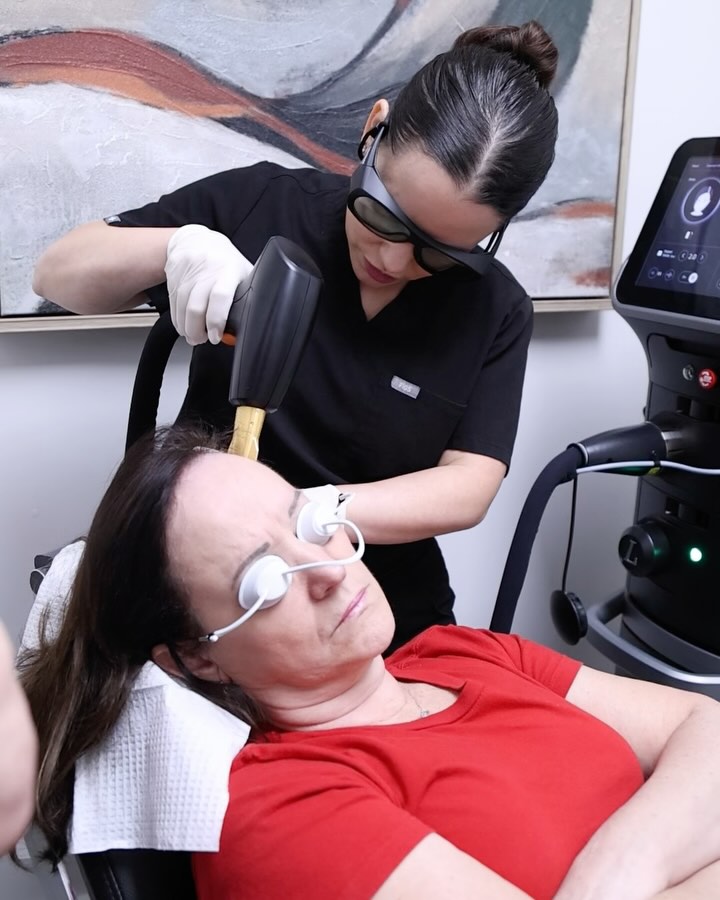
- light-based hair treatments
- correcting nutritional or hormonal problems
The right option depends on the diagnosis. For example, topical minoxidil is widely used for pattern hair loss, but evidence that it speeds recovery from uncomplicated acute telogen effluvium is less certain.
PRP is another option used in hair restoration.
A 2024 systematic review and meta-analysis of PRP for androgenetic alopecia included 14 studies and 431 participants and found an average increase of 27.55 hairs per cm² compared with controls. However, the evidence was considered low quality and results varied between studies, so PRP should not be presented as a guaranteed cure for GLP-1-related telogen effluvium.
Can a GLP-1 Dose Increase Unmask Existing Hair Loss?
Yes. This is something many people do not realize.
You may already have early male or female pattern hair loss without noticing it. Then telogen effluvium causes a sudden increase in shedding, making the underlying thinning much easier to see.
In that situation, improving nutrition and waiting for the temporary shedding to stop may not fully address the problem. The temporary telogen effluvium and the underlying pattern hair loss may need to be managed separately.
What Patients Are Saying
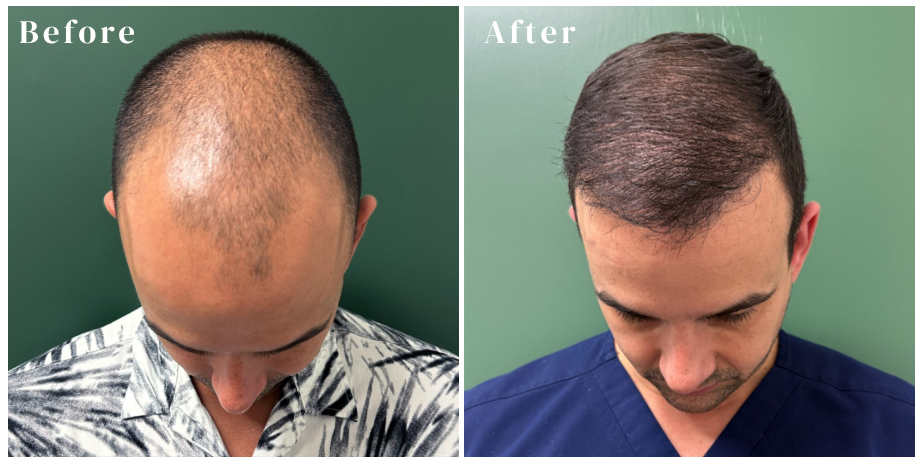
Feedback from patients who have undergone hair and eyebrow restoration at Graft Hair Restoration & Aesthetics.
Google Reviews
★★★★★ 5.0
Based on 171 Google reviews
★★★★★
“I have never written a review before, but my experience with Graft Hair Restoration and Aesthetics, ARNP & Founder Elsa R., truly deserves the highest praise.”
Jus G.
★★★★★
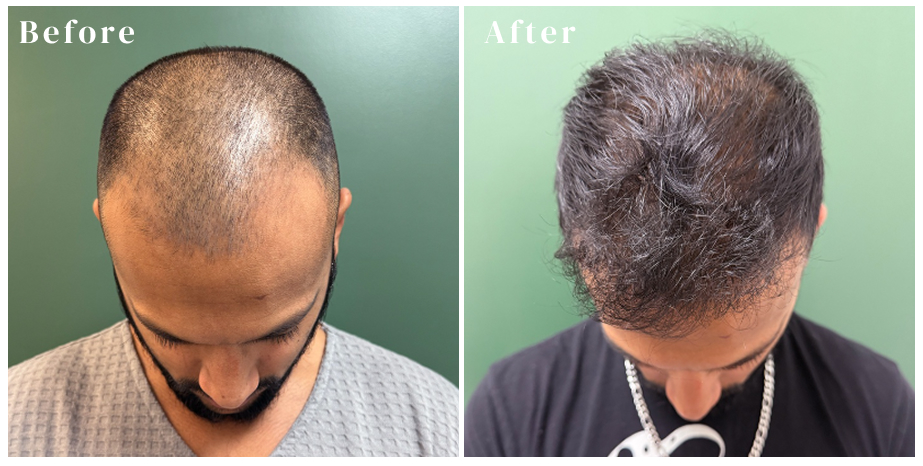
“II have noticed a significant difference in my hair growth. I can see the new hair growth comparing my before and after pictures.”
Ivette Gonzalez
Individual experiences and results vary.
Should You Reduce or Stop Your GLP-1 Because of Hair Loss?
Hair shedding does not automatically mean you need to stop your medication.
Your prescribing clinician may look at:
- how quickly you are losing weight
- how much you are able to eat
- the severity of the shedding
- other side effects
- your overall health
- why you are taking the medication
Any decision to slow titration, change the dose, or discontinue treatment should be made with the clinician managing your GLP-1.
How Long Does Hair Loss Last After a GLP-1 Dose Increase?
Hair does not respond immediately to changes happening inside the body.
With telogen effluvium, the event that triggers the shedding may happen one to six months before you actually notice increased hair falling out. Acute telogen effluvium generally lasts less than six months, although the timeline varies from person to person.
Once the underlying trigger is corrected or stabilizes, new hair can begin growing again. Visible improvement takes time because scalp hair grows slowly.
It is normal for stopping the excessive shedding and restoring your previous density to happen on different timelines.
When Should You See a Hair Loss Specialist?
Consider a professional evaluation if you have:
- persistent or worsening shedding
- noticeable loss of hair density
- round or patchy bald areas
- scalp redness, itching, scaling, burning, or pain
- possible scarring
- hair loss without significant weight loss
- symptoms that could suggest a nutritional or hormonal problem
- little improvement after the suspected trigger has stabilized
A hair-loss evaluation can also be helpful when you are simply unsure whether your GLP-1 treatment is actually responsible.
If your hair is continuing to thin, getting the cause identified early can help you avoid spending months trying treatments that may not match your type of hair loss.
Why Choose Graft Hair Restoration and Aesthetics for Hair Loss Treatment in Kendall, FL?
Hair loss treatment should start with understanding why your hair is thinning.
At Graft Hair Restoration and Aesthetics, the focus is on personalized hair restoration rather than assuming every patient needs the same procedure. The practice offers hair restoration options that include PRP and exosome therapy, FOLIX laser treatment, and hair transplantation when appropriate.
That range of options matters because temporary shedding after weight loss is very different from established pattern hair loss. The treatment plan should match what is happening with your follicles, your scalp, and your overall health.
Graft also states that its hair restoration approach emphasizes personalized care, follow-up, and long-term support.
Serving Kendall and Nearby Miami-Dade Communities
Graft Hair Restoration and Aesthetics is located in Kendall and serves patients throughout the Miami-Dade County community. The practice also welcomes patients from nearby areas including Miami, Coral Gables, Pinecrest, and surrounding communities seeking professional hair restoration care.

Frequently Asked Questions
Can increasing a GLP-1 dose cause hair loss?
Hair loss can occur during GLP-1 treatment, particularly alongside significant weight reduction. A dose increase may also increase appetite suppression or affect how much you eat. However, it is difficult to say that the higher dose itself is always the direct cause.
How soon after increasing my GLP-1 dose can hair shedding start?
Telogen effluvium is delayed. Shedding may become noticeable roughly one to six months after the trigger, with around three months being common.
Will my hair grow back while I continue taking a GLP-1?
It can. If the follicles remain healthy and the trigger, such as rapid weight loss or inadequate nutrition, improves, normal growth may return even if you remain on treatment. Persistent hair loss should still be evaluated.
Should I take biotin for GLP-1 hair loss?
Not automatically. Supplements are most useful when they correct an actual nutritional problem. Biotin is widely marketed for hair, but taking extra biotin without a deficiency does not necessarily treat the reason you are shedding.
Does minoxidil help with GLP-1-related hair loss?
It may be appropriate for some patients, particularly if pattern hair loss is also present. For uncomplicated telogen effluvium, the main priority is usually correcting the underlying trigger.
Can PRP help with hair loss after rapid weight loss?
PRP may support hair density in selected patients, particularly those who also have pattern hair loss. Research supports potential benefits for several forms of alopecia, but PRP has not been established as a specific cure for GLP-1-related telogen effluvium.
Get Help for Hair Loss After a GLP-1 Dose Increase in Kendall, FL
If you have noticed increased shedding after changing your GLP-1 dose, you do not have to guess whether it is temporary or whether another type of hair loss is developing.
Schedule a consultation with Graft Hair Restoration and Aesthetics in Kendall, FL to have your hair and scalp evaluated and discuss treatment options based on the cause of your hair loss.

WRITTEN AND REVIEWED BY
Elsa Rivero, APRN
Founder of Graft Hair Restoration & Aesthetics
Elsa Rivero, APRN, is the founder of Graft Hair Restoration & Aesthetics and has more than 18 years of experience caring for patients. Her approach combines hands-on experience, personalized treatment planning, and advanced hair restoration techniques to help patients achieve natural-looking results that fit their individual goals.
Elsa Rivero’s Credentials Include:
- Master of Science in Nursing, Family Practice — South University, 2019
- Bachelor of Science in Nursing — Keiser University
- Associate in Nursing — Keiser University, 2010
- 18+ Years of Patient Care Experience
- Advanced Training in Hair Restoration
Expertise Areas:
Hair Restoration, FUE Hair Transplantation, Eyebrow Transplantation, Personalized Hair Restoration Planning, Donor Hair Assessment, and Aesthetic Treatments.